The Social Appeal of Celebrity Lookalikes and Why People Search for Their Matches
There is a unique cultural fascination with finding faces in the crowd that mirror famous profiles. Searches like look like celebrities, celebs i look like, and what celebrity i look like reflect more than curiosity; they tap into identity, social validation, and entertainment. When people ask who they resemble, they often want a quick visual shorthand that connects them to a persona — whether it’s the glamour of a movie star, the charisma of a musician, or the iconography of a historic public figure.
Online platforms and social media amplify this interest by making comparisons instant and shareable. A single match can generate likes, comments, and conversation, turning personal resemblance into a social event. That’s why terms like celebrities look alike and celebrity look alike consistently rank high in search trends: they promise a fast, visual result that’s engaging and easily posted to profiles or stories.
From a marketing perspective, the appeal is measurable. Brands and content creators use lookalike content to increase engagement because it invites direct audience participation: users upload photos, receive matches, and then tag friends to compare. This loop fuels further searches for keywords such as celebrity i look like and look alikes of famous people, ensuring these phrases remain powerful for SEO and social sharing. The emotional payoff — surprise, flattery, or humor — keeps people returning to find out which famous face they resemble next.
How Celebrity Look Alike Matching Works: From Face Detection to Celebrity Comparison
Advanced matching systems combine face detection, feature analysis, and deep learning to generate reliable comparisons. The process begins when a face is located within an uploaded photo using face detection algorithms that identify eyes, nose, mouth, and overall head contours. After detection, landmark extraction maps precise points on the face — such as the distance between the eyes or the shape of the jawline — creating a unique biometric template.
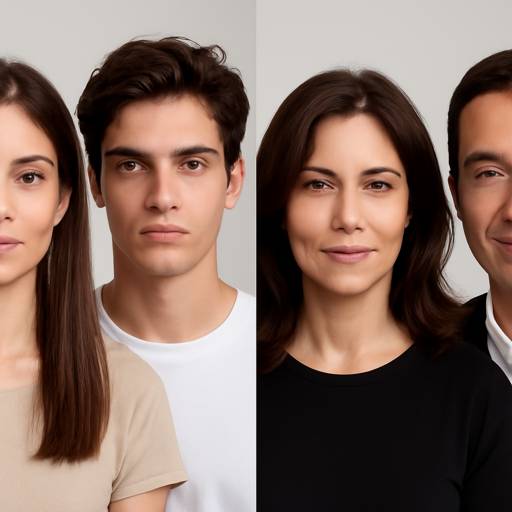
Once a template is generated, the matching engine compares it to a large database of celebrity images. Modern implementations use convolutional neural networks (CNNs) and embedding spaces where each face is represented as a numerical vector. The system calculates similarity scores between your vector and celebrity vectors, ranking results by closeness. This is the technical foundation behind services that promise to tell you what actor you look like or to show looks like a celebrity matches in seconds.
Accuracy depends on multiple factors: image quality, lighting, pose, and the diversity of the celebrity database. Some platforms enhance results with metadata like age range, ethnicity-aware models, and hairstyle normalization to reduce false positives. Privacy-aware services anonymize templates and offer opt-out choices, while ethical implementations clarify that matches are probabilistic impressions rather than biological truths. When looking for a quick comparison, try reputable tools like celebrity look alike, which streamline these steps into a simple upload-and-match experience.
Real-World Examples, Case Studies, and Practical Tips for Better Matches
Several viral cases demonstrate how lookalike matches capture attention. A social influencer once posted a side-by-side of her photo and a classic Hollywood star — the resemblance sparked media coverage and led to a brand partnership. In another instance, a genealogy group used crowd-sourced celebrity comparisons to find historical facial similarities across family photos, helping volunteers refine hypotheses about ancestral traits. These real-world examples show that lookalike tools can be both playful and practically useful.
To get the best result when searching for celebrities that look alike, use clear, high-resolution photos with a neutral expression and direct gaze. Avoid extreme angles or heavy makeup that obscure facial landmarks. Multiple photos taken under different lighting conditions can yield more robust matches by allowing the algorithm to average features. If ethnicity or age plays a role in the database, select filters or specify preferences to surface more relevant comparisons — this reduces mismatches and improves satisfaction with results for queries like celebrities that look alike.
Beyond entertainment, lookalike matching has creative applications: casting calls use it to shortlist actors who naturally resemble historical figures; costume designers reference lookalikes to achieve period accuracy; and visual artists study matches to explore archetypal facial structures. While the technology is impressive, remember that resemblance is subjective and contextual. Matches are starting points for storytelling and self-discovery rather than definitive labels for how a person should be seen. Whether you’re searching who you most closely mirror among stars or comparing faces for artistic projects, tools that identify look alikes of famous people can open new ways to explore identity and creativity.

Kathmandu astro-photographer blogging from Houston’s Space City. Rajeev covers Artemis mission updates, Himalayan tea rituals, and gamified language-learning strategies. He codes AR stargazing overlays and funds village libraries with print sales.